◆ DONALD J. TRUMP AS A PUBLIC DANGER ◆
A Civic, Economic, Psychological, Constitutional, and National-Security Opinion
Permanent Document Link: https://8k.press/Kens-Trump-Opinion.html
X Tweet Version: https://x.com/FreeWorldBank/status/2056131536337223804
YouTube Playlist About All This: https://www.youtube.com/playlist?list=PL2sS6bGk1mzEAx6YdFf3PhHpf96fsCkMr
Critical Background Info in the New York Times: https://www.nytimes.com/2025/07/14/us/politics/trump-putin-ukraine.html#permid=143523033
My intended audience includes serious public thinkers: economists, constitutional scholars, investigative journalists, congressional oversight staff, national-security professionals, scientists, ethicists, and elected officials. Examples include people in Paul Krugman’s intellectual tradition; Senator Elissa Slotkin, whose official biography describes her as a former CIA analyst with national-security roles at the Pentagon and White House; Senator Mark Kelly, whose official biography describes him as a U.S. Navy combat pilot, NASA astronaut, and U.S. Senator for Arizona; and public servants who understand that democracy can fail through repeated, normalized abuse of power.
The following is my personal opinion, stated in the form of forceful public-interest argument.
I am deliberately stating my conclusions with moral clarity because I believe the danger is obvious, urgent, and historically consequential. This should be understood as political opinion, civic warning, rhetorical critique, and public moral argument, not as a neutral news report, court finding, medical diagnosis, or intelligence assessment.
When I use strong terms such as corrupt, cruel, sadistic, authoritarian, malignant, psychopathic, criminal, or dangerous, I am expressing my interpretation of Donald J. Trump’s public conduct, political behavior, leadership style, governing record, and apparent moral character as I understand them.
This disclaimer is not a retreat from the argument. It is a clarification of what kind of argument this is: a citizen’s public-interest warning, written with moral urgency, constitutional concern, and a commitment to peaceful, lawful democratic accountability. The claims that follow should be read as civic opinion, rhetorical critique, and warning about institutional risk.
Donald J. Trump is, in my opinion, best understood as a digital-age performance artist of corruption: an exaggerated public villain whose political function is to reveal how greed, cruelty, authoritarianism, narcissism, propaganda, institutional cowardice, and elite impunity operate when they are no longer hidden.
He behaves like a cartoon villain because, politically and morally, that is what he has become.
He is not merely a flawed politician. He is not merely a disruptive celebrity. He is not merely a partisan opponent.
He is, in my view, a clear and present danger to democratic self-government, constitutional order, public safety, scientific reason, lawful administration, global stability, and the basic moral premise that government exists to serve the people rather than dominate them.
That is why the responsible adults — economists, scientists, national-security professionals, judges, senators, journalists, civil servants, inspectors general, public-interest lawyers, military leaders, historians, and voters — must stop treating Trumpism as normal politics.
It is not normal politics.
It is an organized stress test of democracy by people who have already shown us what they are willing to do.
My central claim is this:
Not morally.
Not intellectually.
Not emotionally.
Not constitutionally.
Not administratively.
Not scientifically.
Not economically.
Not diplomatically.
Not militarily.
Not in any position where the lives, rights, privacy, money, medicine, safety, or constitutional freedoms of other people depend on his judgment.
Trump is, in my opinion, a man of extreme appetite and minimal conscience.
He appears to experience public office not as stewardship, but as possession; government not as a constitutional trust, but as a loyalty machine; law not as a binding framework, but as an obstacle; expertise not as a public good, but as an enemy; truth not as a duty, but as material to be bent, branded, sold, denied, or buried.
This is why his political movement is so dangerous.
Trumpism is not merely ideology. It is a permission structure for cruelty.
It tells angry people that empathy is weakness. It tells wealthy people that accountability is persecution. It tells officials that loyalty to one man can supersede loyalty to the Constitution. It tells institutions that if they normalize enough abuse, abuse becomes procedure.
And it tells the public that exhaustion is the same thing as consent.
It is not.
Donald Trump is a mass-media creature.
He is television, branding, grievance, spectacle, insult, domination, resentment, and self-promotion fused into one political product.
He does not merely communicate through media. He is a media weapon.
- He understands attention better than responsibility.
- He understands humiliation better than governance.
- He understands branding better than law.
- He understands domination better than democracy.
He performs power as cruelty. He performs wealth as superiority. He performs ignorance as authenticity. He performs vengeance as justice. He performs lawlessness as strength. He performs corruption as confidence.
That is why calling him merely “unqualified” is insufficient.
The deeper problem is that Trump’s unfitness is not accidental. His unfitness is part of the product.
The cruelty is part of the appeal. The chaos is part of the strategy. The lying is part of the bonding mechanism. The corruption is part of the loyalty test. The attack on expertise is part of the authoritarian method.
He is not failing to be a normal president. He is succeeding at being an anti-democratic spectacle.
For economists, the Trump problem should be obvious.
Trump is not a serious steward of a modern economy. He is a salesman of resentment wrapped in fraudulent certainty.
His economic worldview appears to be built from domination fantasies:
- tariffs as threats
- trade as humiliation
- debt as someone else’s problem
- wealth as moral superiority
- bargaining as bullying
- public money as private leverage
- regulation as personal inconvenience
- scientific expertise as enemy action
Against the advice of ethical economists, Trump-style politics treats mutually destructive economic threats as strength. It mistakes coercion for strategy, volatility for leverage, market fear for negotiation, cruelty for discipline, and corruption for efficiency.
A serious economy depends on trust.
Trust in law. Trust in contracts. Trust in data. Trust in public statistics. Trust in courts. Trust in monetary stability. Trust in regulatory competence. Trust in public health. Trust in scientific expertise.
Trump corrodes that trust.
And when trust collapses, the costs are not abstract. People lose jobs, savings, medicine, housing, health care, bargaining power, and faith that the system is anything other than organized predation.
That is why Trumpism is not merely a moral crisis. It is an economic governance crisis, a rule-of-law crisis, a market-integrity crisis, and a public-trust crisis.
Donald Trump’s hostility toward science is not incidental. It is central to his political method.
Science requires evidence. Trumpism requires submission. Science requires correction. Trumpism requires loyalty. Science requires humility before reality. Trumpism requires reality to kneel before power.
Trumpism asks: Who benefits if people believe it?
A society cannot survive the destruction of truth systems.
Public health, climate policy, environmental protection, drug safety, infrastructure, national security, economic policy, disaster response, elections, and courts all depend on truth.
Without truth, government becomes theater. Without evidence, policy becomes propaganda. Without expertise, cruelty and fantasy fill the vacuum.
In my opinion, Trump’s attacks on science, expertise, environmental regulation, public health, and independent knowledge institutions are attacks on the civilization-level infrastructure that allows a modern democracy to distinguish reality from wishful thinking, corruption, and ideological violence.
The Constitution is not a decorative object. It is not a slogan. It is not a prop for rallies. It is not a loyalty oath to a president.
It is a system of constraints.
It exists because the founders understood that human beings are corruptible, power is dangerous, ambition is endless, and no person can be trusted with unchecked authority.
Trump’s entire political style is hostile to that premise.
He wants loyalty without accountability. Power without restraint. Obedience without law. Immunity without humility. Office without service. Authority without truth.
The constitutional problem is not only what Trump has done. The problem is what he has taught other people they can get away with.
He has taught officials to test the line, cross the line, deny the line exists, punish those who object, call accountability persecution, and demand immunity for the next abuse.
That is how constitutional government dies: by attrition, normalization, delay, institutional cowardice, elite rationalization, and legal technicalities weaponized against obvious moral facts.
A republic cannot survive that attitude forever.
In my opinion, January 6 was not an isolated riot. It was the visible eruption of a deeper authoritarian logic:
That is not democracy. That is cult politics.
In a democracy, losing is part of the system. In authoritarian politics, losing is treated as theft.
Trump’s movement has repeatedly attacked the legitimacy of courts, elections, prosecutors, journalists, civil servants, intelligence professionals, scientists, immigrants, cities, universities, and political opponents.
The purpose is not merely to criticize institutions. The purpose is to destroy public confidence in any authority that can contradict Trump.
The leader becomes the source of truth. Everyone else becomes corrupt by definition.
This is not a governing philosophy. It is an epistemic hostage crisis.
National security requires discipline, reality-testing, alliances, intelligence, trust, and judgment.
Trump weakens all of them.
A president who cannot distinguish personal grievance from national interest is a security risk. A president who admires strongmen is a security risk. A president who undermines allies is a security risk.
A president who treats classified information, intelligence agencies, military loyalty, and diplomatic commitments as personal instruments is a security risk.
This should not be a partisan observation. It should be a professional one.
A democracy is a complex system. It cannot be safely operated by a man who treats constitutional restraint as humiliation.
In my opinion, one of the most urgent oversight questions is whether public data, federal systems, payment infrastructure, personnel files, agency records, and government databases are being exposed to private political capture under the language of “efficiency,” “modernization,” or “cost-cutting.”
That is the DOGE problem as I understand it.
Data is power. Federal data is not just paperwork. It is a map of the country.
If private actors or politically loyal networks gain inappropriate access to federal data systems, that is not merely administrative reform. That is a potential democratic emergency.
A government database is not a toy. A payment system is not a campaign tool. A federal personnel system is not an enemies list. A public benefits system is not a political weapon.
Congressional oversight should ask:
- Who accessed what data?
- Under what authority?
- With what security clearance?
- For what purpose?
- With what audit trail?
- With what deletion requirements?
- With what conflict-of-interest review?
- With what privacy protections?
- With what inspector-general oversight?
- With what congressional notification?
Public data belongs to the public under law. It does not belong to Donald Trump, Elon Musk, any political faction, any private billionaire, or any movement that believes winning an election entitles it to seize the machinery of the state for private ideological use.
I am not offering a clinical diagnosis. I am offering a public moral and behavioral judgment.
In my opinion, Trump’s public behavior displays traits that are profoundly dangerous in a leader:
- cruelty
- grandiosity
- impulsiveness
- contempt for limits
- absence of remorse
- domination-seeking
- chronic dishonesty
- grievance addiction
- revenge orientation
- inability to accept loss
- hostility toward correction
- indifference to suffering
- preference for loyalists over experts
A private citizen with those traits can harm families, employees, investors, and communities. A president with those traits can harm the world.
This is why moral character matters in public office.
Not because leaders must be perfect. No human being is perfect.
But because certain defects are disqualifying when amplified by state power.
Trumpism is not merely wrong. It is cruel.
That distinction matters.
Bad policy can be corrected. Cruelty must be confronted.
There is a kind of politics that makes mistakes while trying to govern. Trumpism is something else.
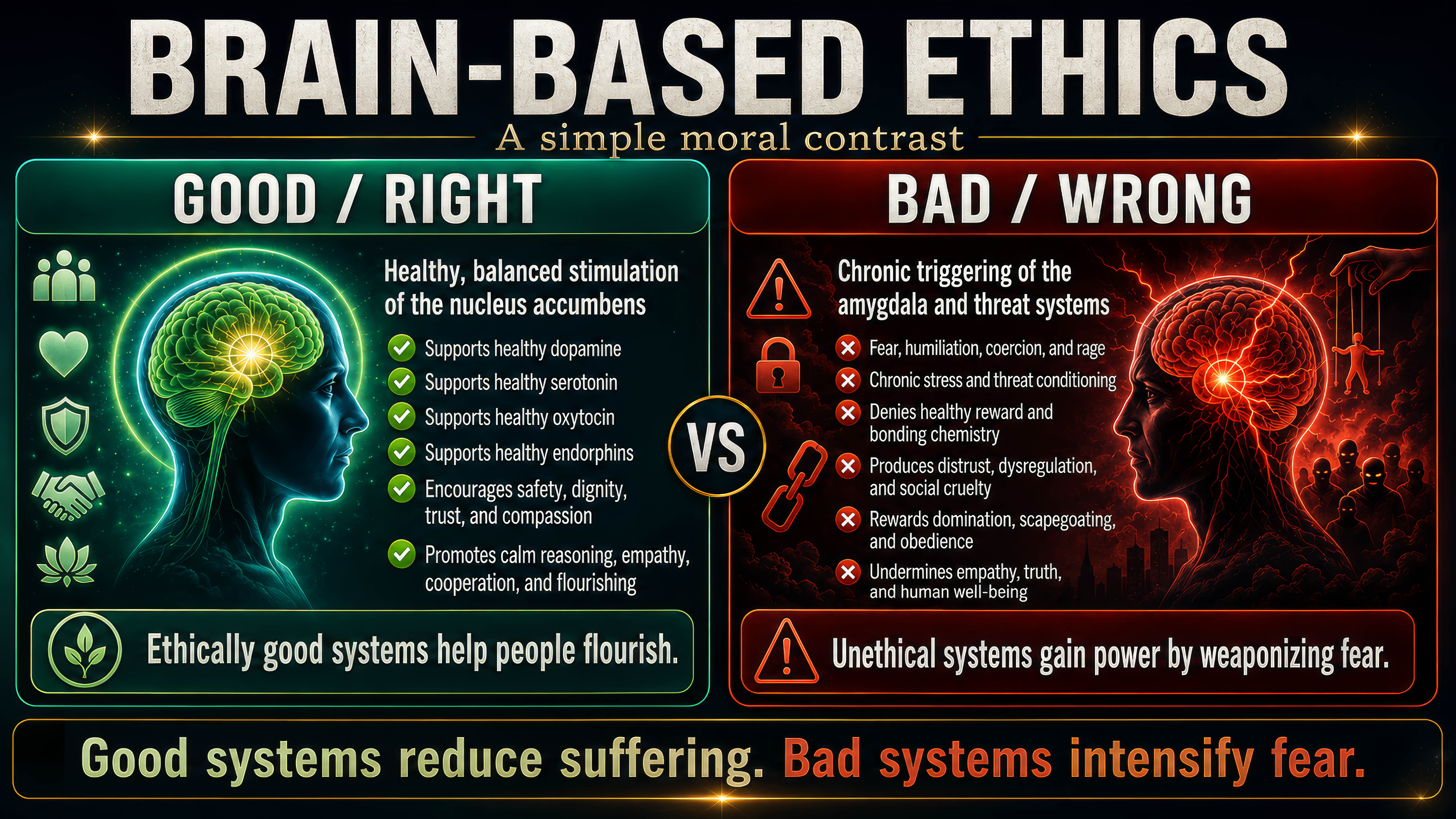
It appears to enjoy humiliation. It appears to seek dominance. It appears to use fear as a bonding agent. It appears to punish vulnerability as weakness.
That is not conservatism. That is not patriotism. That is not constitutionalism. That is not strength.
That is moral sadism converted into political performance.
A society that normalizes this will become less free, less kind, less rational, less safe, and less capable of self-correction.
Trump did not become dangerous alone. He was enabled.
- By donors.
- By lawyers.
- By judges.
- By media executives.
- By party officials.
- By think tanks.
- By lobbyists.
- By ideological entrepreneurs.
- By religious-right power brokers.
- By fossil-fuel interests.
- By billionaire opportunists.
- By cynical members of Congress.
Trump’s ignorance is dangerous. But elite cowardice is what makes Trumpism scalable.
The truly frightening thing is not only that Trump behaves this way. It is that so many educated, credentialed, powerful people have decided to excuse, rationalize, monetize, imitate, or weaponize his behavior.
Congressional oversight must not focus only on Trump as an individual. It must examine the network: who benefits, who funds, who coordinates, who writes the plans, who supplies the legal theories, who captures the agencies, who attacks oversight, who gets the data, and who gets paid.
Trump is the performer. The machinery behind him is the system that must be investigated.
For people in the Paul Krugman intellectual tradition — economists, policy analysts, empiricists, anti-austerity thinkers, public intellectuals, liberal institutionalists, and people who still believe facts matter — the Trump phenomenon should be understood as a convergence of several failures:
- market failure
- media failure
- institutional failure
- information failure
- elite-accountability failure
- constitutional-enforcement failure
- civic-education failure
- moral-leadership failure
Trumpism is not merely a set of bad opinions. It is a political economy of resentment.
It converts downward mobility, racial panic, media fragmentation, rural decline, masculine humiliation, billionaire propaganda, religious grievance, and institutional distrust into authoritarian loyalty.
It then sells that loyalty back to the public as entertainment, identity, revenge, and belonging.
This is why ordinary fact-checking is insufficient. Fact-checking assumes the audience is still operating inside a shared truth system. Trumpism attacks the truth system itself.
And economists should care, because no advanced economy can function indefinitely when public truth collapses.
For senators, congressional investigators, and oversight staff, the question should not be: “Is Trump too controversial?”
Oversight should examine:
- abuse of executive authority
- politicization of federal agencies
- attacks on inspectors general
- retaliation against civil servants
- misuse of public funds
- conflicts of interest
- foreign influence vulnerabilities
- data access and data misuse
- attacks on election administration
- threats to judicial independence
- corruption in procurement
- ideological capture of agencies
- private actors embedded in public power
This is not revenge. This is constitutional maintenance.
A republic must inspect damage after an attempted authoritarian stress test. It must identify the weak points, repair the system, create consequences, and prevent repetition.
The goal is not partisan punishment. The goal is democratic survival.
One reason Trump has survived politically is that elite language often fails to describe him accurately.
People say: “norm-breaking,” “unconventional,” “polarizing,” “transactional,” “populist,” “disruptive,” “combative,” “controversial.”
These words are too weak. They launder the reality.
The more accurate words, in my opinion, are:
cruel
corrupt
reckless
sadistic
authoritarian
lawless
vengeful
predatory
fraudulent
unfit
dangerous
Civilized language should not become a shield for uncivilized behavior.
There are times when precision requires moral force. This is one of those times.
The duty now is peaceful, legal, constitutional, nonviolent, evidence-based resistance to authoritarian abuse.
That means:
- investigate
- document
- litigate
- legislate
- expose
- organize
- vote
- protect records
- protect witnesses
- protect inspectors general
- protect civil servants
- protect courts
- protect journalists
- protect scientists
- protect election workers
- protect public data
- protect public money
- protect constitutional limits
It also means refusing to normalize what should never be normal.
The public has a right to honest language.
I believe Donald J. Trump is morally, intellectually, emotionally, and constitutionally unfit for public office.
I believe he represents a clear and present danger to democratic self-government.
I believe his movement has normalized cruelty, corruption, dishonesty, vengeance, and contempt for expertise.
I believe his attacks on science, law, elections, journalism, public service, and constitutional restraint are attacks on the operating system of democracy.
I believe elite enablers are just as important to investigate as Trump himself.
I believe congressional oversight must follow the money, the data, the legal theories, the agency capture, the personnel networks, the private actors, and the institutional failures.
I believe public data must be protected from political and private capture.
I believe the American people deserve government by law, not government by billionaire, television personality, ideological faction, or personal revenge machine.
I believe economists, scientists, lawyers, senators, journalists, and historians must speak more plainly.
I believe moral clarity is not extremism.
I believe refusing to name danger is how danger grows.
Donald J. Trump is, in my opinion, the public face of a deeper democratic emergency.
He is the performer. The system behind him is the scandal.
The corruption is not only personal. It is institutional.
The cruelty is not only emotional. It is political.
The danger is not only what he has done. It is what others have learned they can do if there are no consequences.
That is why this moment requires more than outrage.
It requires investigation, documentation, constitutional courage, economic honesty, scientific seriousness, and public language strong enough to describe public danger.
Trump has shown us what authoritarian corruption looks like when it wears makeup, smiles for cameras, sells merchandise, attacks judges, threatens enemies, flatters dictators, lies without shame, and calls the result patriotism.
I do not accept that as patriotism. I do not accept that as conservatism. I do not accept that as democracy. I do not accept that as normal.
◆ I believe Trumpism is a system of organized public corruption. ◆
◆ I believe the responsible adults must act — peacefully, legally, constitutionally, and immediately. ◆
Not because we hate democracy’s opponents.
Because we love democracy enough to defend it from people who would destroy it for power, profit, revenge, and applause.
— Ken Meyering